
Traditional vs. Western Perspectives on Acupuncture
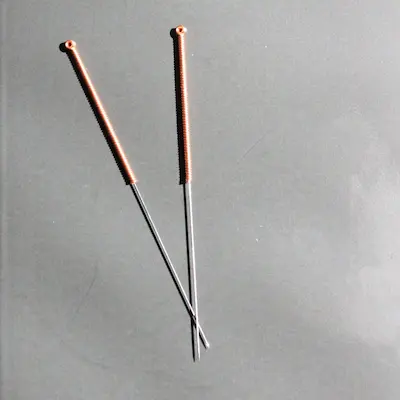
In Traditional Chinese Medicine, acupuncture is based on the theory of Qi, a life-giving energy that flows through the body along meridians, or energy channels. Health is understood as a state of balance, while illness is seen as a disturbance or blockage of the Qi flow. The goal of acupuncture is to restore this balance by inserting needles at specific acupuncture points that regulate the energy flow.
In contrast, Western medicine views acupuncture primarily as a form of pain therapy and a method that influences the body’s physiological responses. The Western perspective focuses on the neurological and physiological mechanisms activated by inserting needles at certain points on the body. It is believed that acupuncture releases endorphins, improves circulation, and reduces the perception of pain.
The scientific Perspective
A healthy dose of skepticism toward the scientific literature on acupuncture is not without reason. Many published studies appear in journals with limited academic standing, are produced by small research teams, suffer from methodological flaws, or rely on very small participant groups—making firm conclusions difficult. Well-designed, large-scale studies from respected institutions remain rare. Bias and lack of interest often prevent such projects from receiving funding in the first place, and when they do, the cost and complexity of conducting them can be prohibitive.
One notable exception is the so-called GERAC series (German Acupuncture Trials) [1–3], conducted in Germany in the 2000s under strict methodological standards—randomized, double-blind, controlled cohort studies with large sample sizes—that attracted international attention. Based on their findings, acupuncture was approved in Germany as a reimbursable health insurance benefit for certain specific indications [3]. The results showed that both genuine acupuncture and so-called sham acupuncture produced significantly better outcomes than conventional standard care in people with chronic back pain, knee osteoarthritis, and migraine. However, no significant difference could be demonstrated between real and sham acupuncture. These findings were later confirmed in a 2020 systematic review [4] and remain part of the ongoing debate. The argument goes: if sham acupuncture—needling that does not target the exact acupuncture point—works just as well as true acupuncture, then the effect must be a placebo.
Critisism of the Interpretation
It has been pointed out that so-called sham acupuncture was, in fact, not a true placebo. The long-held belief that acupuncture points can be located with millimeter precision is now considered outdated. In practice, they are usually functional zones—an observation recently highlighted by a researcher from Harvard University [5]. Research shows that, in practice, acupuncture points are functional zones whose size and anatomical makeup can vary. Some contain a high density of nerve endings or small nerve bundles, others are located close to neurovascular bundles, and still others coincide with junctions between muscles and fascia. Not all points share the same anatomical features, yet many appear to transmit mechanical, electrical, or chemical stimuli particularly effectively. From a scientific perspective, the question of what precisely constitutes an acupuncture point remains unresolved and calls for further investigation. Adding to the complexity, acupuncture is only one component of Traditional Chinese Medicine (TCM), which is rooted in its own distinct philosophy—a framework that is often not fully considered, leading to frequent misunderstandings.
Perspectives beyond the scientific discourse
Historical Context
For centuries, Western science has played a dominant role in global knowledge production. Historically, however, Eastern civilizations surpassed the West in many areas. Asian cultures, for example, developed technologies such as the magnetic compass, paper, printing, porcelain, the loom, and gunpowder—just to name a few—at a time when the West was still in a comparatively stagnant phase of technological development. [6].
In this context, I find it presumptuous to dismiss Eastern healing practices outright, even though there have indeed been cases of fraud—particularly in the field of acupuncture. Reports and videos claiming that local anesthesia could be achieved solely through electroacupuncture during surgical procedures initially caused a sensation, but were later exposed as fabrications. However, this fact should be understood in the broader context of ideological propaganda between East and West during the Cold War, rather than taken as definitive proof that acupuncture lacks any therapeutic effect [7].
Resitance and Medical Dogma
The Western view of science and technology as the benchmark for global progress has not been free from error—past or present. A striking example comes from the history of Western medicine: in the 19th century, Hungarian physician Ignaz Semmelweis discovered that handwashing before assisting in childbirth dramatically reduced mortality rates in maternity wards. He campaigned vigorously for his findings, but met fierce resistance from established colleagues who rejected his theory. Semmelweis was discredited and later committed to a psychiatric institution, where he was likely murdered. It was only years later—after his discovery was confirmed by Louis Pasteur and other scientists—that the importance of hygiene in medicine became widely accepted..
A more recent and less dramatic example is the discovery of Helicobacter pylori as a cause of stomach ulcers. Until the 1980s, ulcers were widely believed to result from excessive acid production and stress. In 1982, Australian physicians Barry Marshall and Robin Warren discovered that the bacterium Helicobacter pylori plays a central role in their development. Their finding initially met strong resistance, as the medical community at the time was unwilling to accept the idea that a bacterium could cause stomach ulcers. Today, this is established medical knowledge.
There are many more such examples, all illustrating the kinds of resistance that treatment methods outside the medical mainstream can face. Whether Western skepticism toward acupuncture represents a mistaken dogma remains, for now, an open question.
Personal Persepective
With my academic background and professional environment, I too find myself in the crossfire of the debates outlined above. From a scientific standpoint, it remains to be determined whether acupuncture is purely a placebo effect. I believe, however, that we do not yet fully understand the underlying mechanisms, and that far more research is needed before such a conclusion can be drawn. For me, this question is of secondary importance—what matters most is the practical benefit I observe in my patients.
My experiences with patients have been convincing enough for me to keep an open mind toward acupuncture. I use it where it has proven to be a well-tolerated and helpful component of therapy. At the same time, I consider it essential to be transparent about the limits of current scientific knowledge. In my view, this discussion underscores that acupuncture belongs in responsible hands—where conventional medical considerations are never overlooked.
Conclusion
A beneficial effect of acupuncture in humans, compared with standard therapies, has been scientifically demonstrated. While the exact mechanism of action remains unclear for now, the positive results seen in clinical practice highlight its potential as a valuable complement to conventional treatment methods.
If you would like to learn more about the possibilities of acupuncture, feel free to get in touch. I will be happy to advise you on how this method can be integrated into your animal’s treatment as a supportive measure.
References
- Molsberger AF, Mau J, Pawelec DB, Winkler J. Does acupuncture improve the orthopedic management of chronic low back pain–a randomized, blinded, controlled trial with 3 months follow up. Pain. 2002 Oct;99(3):579-587. doi: 10.1016/S0304-3959(02)00269
- Streitberger, K., Mansmann, U. & Victor, N. GERAC-Studie zu Akupunktur bei Gonarthrose. Trauma Berufskrankh 9 (Suppl 3), S365–S369 (2007). https://doi.org/10.1007/s10039-007-1230-7
- Tragende Gründe zum Beschluss des Gemeinsamen Bundesausschusses Deutschlands zur Akupunktur vom 18.04.2006. https://www.g-ba.de/downloads/40-268-71/2006-04-18_Akupunktur-TGr.pdf?
- Mu J, Furlan AD, Lam WY, Hsu MY, Ning Z, Lao L. Acupuncture for chronic nonspecific low back pain. Cochrane Database of Systematic Reviews 2020, Issue 12. Art. No.: CD013814. https://doi.org/10.1002/14651858.CD013814
- Langevin HM, Wayne PM. What Is the Point? The Problem with Acupuncture Research That No One Wants to Talk About. J Altern Complement Med. 2018 Mar;24(3):200-207. doi: https://doi.org/10.1089/acm.2017.0366 Epub 2018 Mar 1.
- Naturwissenschaft im alten China und eine fernöstliche Sichtweise physikdidaktischer Methoden / vorgelegt von Christian Waltenberger. 2015. Institut für Physik, Uni Graz, Diplomarbeit. https://unipub.uni-graz.at/obvugrhs/content/titleinfo/495864/full.pdf
- Baum E. Acupuncture Anesthesia on American Bodies: Communism, Race, and the Cold War in the Making of “Legitimate” Medical Science. Bull Hist Med. 2021;95(4):497-527. doi: 10.1353/bhm.2021.0055
Bild: VetDynamics
It has often been pointed out that so-called sham acupuncture was, in fact, not a true placebo. The long-held belief that acupuncture points can be located with millimeter precision is now considered outdated. In practice, they are usually functional zones—an observation recently highlighted by a researcher from Harvard University.
In this context, I find it presumptuous to dismiss Eastern healing practices outright, even though there have indeed been cases of fraud—particularly in the field of acupuncture. Reports and videos claiming that local anesthesia could be achieved solely through electroacupuncture during surgical procedures initially caused a sensation, but were later exposed as fabrications. However, this fact should be understood in the broader context of ideological propaganda between East and West during the Cold War, rather than taken as definitive proof that acupuncture lacks any therapeutic effect